Look Up This Weekend? You Might See Nothing — And That’s the Point. The ‘Black Moon’
This weekend, on August 22 and 23, a purportedly rare celestial event known as a “black moon” is set to occur. But before you plan a special stargazing party, an astrophysicist has a reality check: you won’t actually see a thing.
We spoke with Jonathan Blazek, an astrophysicist at Northeastern University, to break down what this event really means for curious skywatchers. His bottom line? It’s more about calendar quirks than cosmic spectacle.
So, What Exactly Is a Black Moon?
First things first: don’t expect a dark, shadowy orb in the sky. According to Blazek, the term “black moon” isn’t an official astronomical designation.
“A ‘black moon’ is not an official astronomical term, and it does not refer to anything unusual happening from a physical perspective,” Blazek says. Instead, much like its more famous cousin, the “blue moon,” it’s all about the awkward fit between our modern calendar and the ancient rhythms of the moon.
The core of the issue is a simple numbers game. Our calendar months are 30 or 31 days long, but the lunar cycle—the time from one new moon to the next—is only about 29.5 days. This slight mismatch occasionally creates an extra new moon within a season.
Black Moon vs. Blue Moon: A Calendar Quirk
To understand the black moon, it helps to know the blue moon. Most people know a blue moon as the second full moon in a single calendar month. A black moon is the new moon equivalent of the *seasonal* blue moon definition.
As Blazek explains, “A black moon is the third new moon in a season that has an extra, fourth new moon.” This summer is one of those seasons, with new moons on June 25, July 24, August 23, and September 21. That makes the event this weekend the third of the four—officially qualifying it as a black moon.
These events aren’t exceedingly rare, happening roughly every 33 months, or about once every three years.
What Can Stargazers Actually Expect to See?
If you’re hoping for a dramatic sight, you’ll be disappointed. In fact, the perfect viewing conditions for a black moon involve seeing absolutely nothing at all.
“There is nothing unusual to see with the black moon. Indeed, because it is a new moon, there is nothing to see at all,” Blazek clarifies.
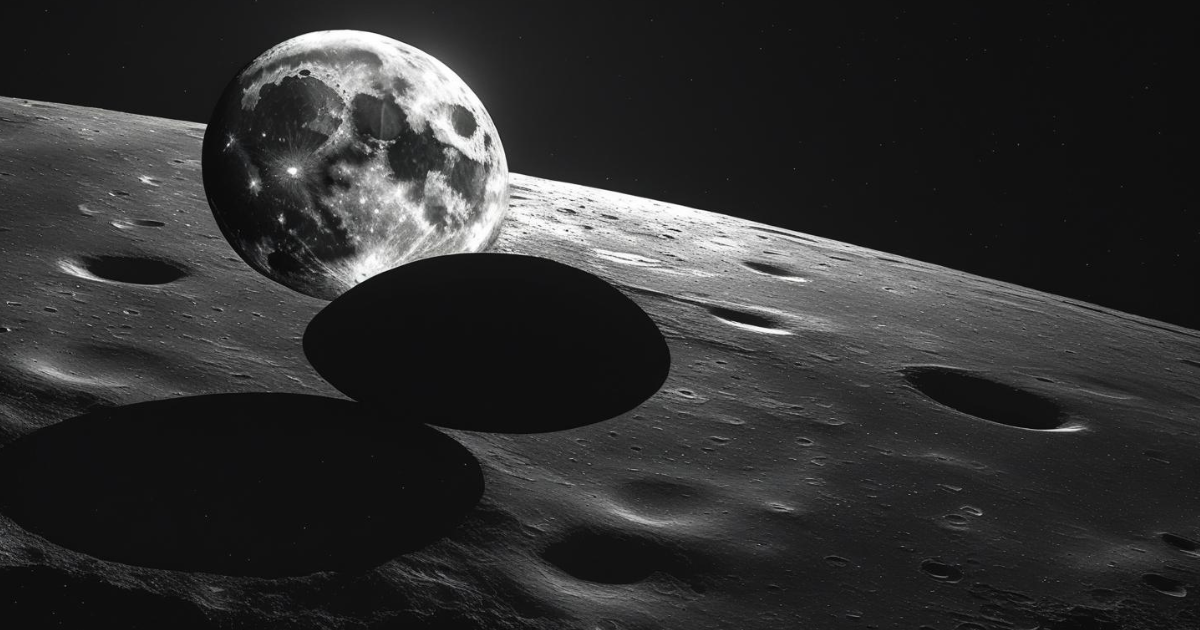
A new moon occurs when the moon is positioned between the Earth and the sun. The side of the moon illuminated by the sun is facing away from us, leaving the side we see in complete darkness. This makes the moon virtually invisible in the night sky, blending seamlessly into the darkness.
Why the Buzz Around an Invisible Event?
While it may be invisible, the black moon does have a silver (or rather, dark) lining for astronomers and stargazers. The pitch-black sky created by the new moon provides the perfect conditions for viewing other celestial wonders.
Without the moon’s light polluting the night sky, fainter objects like distant galaxies, star clusters, and the Milky Way itself become much easier to see with a telescope or from a dark-sky location. So, while you won’t see the black moon itself, the weekend is a fantastic opportunity to look past our closest celestial neighbor and deeper into the cosmos.
So this weekend, you can appreciate the black moon for what it truly is: a fascinating reminder of how we track time and a perfect excuse to enjoy an extra-dark night sky.